By Anthony at Aqua Pond
Last updated: November 2026
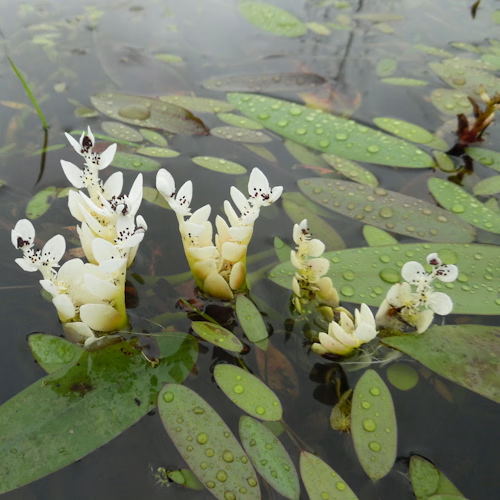
The water hawthorn plant (Aponogeton distachyos) is a deep-water pond plant with floating oval leaves and white, forked flower spikes that smell faintly of vanilla. Its big selling point is timing: it flowers in the cooler months, usually spring and autumn, and often carries on through a mild winter when almost everything else in the pond has died back. It is easy to grow in most UK garden ponds, it is hardy enough for our winters, and it needs very little looking after once it is settled.
We are often asked about it at this time of year, when customers across Bedfordshire, Hertfordshire and Buckinghamshire notice a neighbour’s pond still in flower in late November. Here is what you need to know before adding one to your own pond.
What is the water hawthorn plant?
Water hawthorn comes from South Africa, where it grows in seasonal pools that fill with winter rain and dry out in summer. That background explains its unusual habits in a British pond. It grows from a tuber sitting on the pond floor or in a basket, sends up long stems to strap-shaped leaves that lie flat on the surface, and produces flowers just above the water.
Each flower spike splits into two white “arms” dotted with dark anthers, which is where the name distachyos (two spikes) comes from. Despite the common name, it has nothing to do with the hawthorn hedge plant. The name comes from the scent and the look of the flowers.
Is water hawthorn an oxygenator?
No. It is a deep-water plant with floating leaves, in the same broad group as water lilies, rather than a submerged oxygenating plant. Its leaves do a useful job shading the surface, which helps limit the sunlight that feeds green water algae, but you will still want proper oxygenators in the pond as well. Our guide to deep water pond plants explains how the different plant groups work together.
Is it native or invasive?
It is not native to the UK, but it is widely sold by UK aquatic nurseries and is not one of the invasive pond plants that are banned from sale here. It can self-seed and spread across a pond over a few seasons, so it is worth keeping an eye on in a small pond and thinning it out if it starts to crowd other plants. As with any pond plant, never put it into rivers, streams or wild ponds.
Why grow water hawthorn in your pond?
- Winter interest. It flowers when most pond plants are dormant, so your pond has something to look at from autumn into spring.
- Scent. The flowers have a gentle vanilla scent, best noticed on a still, mild day.
- Surface cover. The floating leaves give shade and shelter to fish and help reduce algae in spring.
- Easy-going. Once planted at the right depth it largely looks after itself.
- Works in smaller ponds. It is less vigorous than many water lilies, so it suits average garden ponds as well as larger ones.
How to plant water hawthorn
When to plant
Spring, from around April, is the best time to plant, as the water is warming and the plant has a full season to establish. You can plant through summer and into early autumn too. If you buy a pot-grown plant in late autumn, plant it during a mild spell rather than in a frost and let it settle without disturbance.
Planting depth
Water hawthorn is happiest with roughly 30 to 60cm (about 12 to 24 inches) of water above the top of the basket, which is the range most UK growers recommend. Deeper water gives the tuber more protection from frost. In shallower water the plant still grows, but the crown is more exposed in a cold winter.
Step by step
- Use a lattice aquatic basket lined with hessian, or a fabric planting bag.
- Fill with aquatic compost or heavy garden soil with no added fertiliser. Ordinary multipurpose compost floats and feeds algae, so avoid it.
- Set the tuber in so the growing point sits just at the surface of the soil, then firm gently.
- Top with a layer of washed gravel to hold the soil in place and stop fish disturbing it.
- Water the basket thoroughly before lowering it in, so it does not cloud the pond.
- Stand it on bricks at a shallower depth for a few weeks, then lower it gradually to its final depth as the leaves reach the surface.
Sun or shade?
It flowers best in a sunny or lightly shaded spot, but it copes with some shade better than water lilies do. If your pond is under trees, it is one of the more reliable flowering plants you can choose.
Water hawthorn care through the year
Spring
This is the main growing and flowering season. Push an aquatic fertiliser tablet into the basket if growth looks weak, and divide congested plants by separating the tubers before replanting.
Summer
Do not panic if it looks tired in hot weather. Leaves often yellow and the plant may rest during a warm spell, just as it would in its native seasonal pools. Pick off dead leaves and spent flower spikes so they do not sink and rot.
Autumn and winter
Growth and flowering pick up again as the water cools. Leave the plant where it is over winter. Hard frost may kill off the leaves, but the tuber is safe below the water. Remove any yellowing or rotting leaves when you can reach them easily, as decaying plant material adds to the sludge that builds up on the pond floor. Our winter pond care guide covers the other jobs worth doing at this time of year.
Fish and water hawthorn
Goldfish and most pond fish leave it alone. Koi can graze on soft new leaves, so in a koi pond a planting basket topped with large cobbles gives it a better chance of establishing.
Common water hawthorn problems
- No flowers. Usually too much shade, planting too deep before the plant is established, or a crowded basket that needs dividing.
- Yellow leaves in summer. Normal summer rest. If it happens in spring, check the plant is not starved and the water quality is good.
- Leaves eaten. Often koi, or water lily aphid and snails in warmer months. Hose aphids off the leaves rather than using sprays, which can harm fish and wildlife.
- Spreading too far. Remove seedlings and surplus tubers when you divide the plant in spring.
Frequently asked questions
When does water hawthorn flower?
Mainly in spring and autumn, and often through mild winters. It tends to pause in the hottest part of summer.
Is water hawthorn hardy in the UK?
Yes, in most of the UK. The leaves may die back in hard frosts, but the tuber survives as long as it sits below the ice in deep enough water.
How fast does water hawthorn spread?
A single plant typically covers up to around a metre of surface once established. It can also self-seed, so new plants may appear in other parts of the pond.
Is water hawthorn edible?
The flower spikes are a traditional ingredient in South African cooking. That does not make plants from a garden pond safe to eat, so treat yours as an ornamental plant.
Need a hand with your pond plants?
Planting and dividing aquatic plants, clearing dead leaves and keeping the water healthy are all part of what we do on our pond maintenance visits. Anthony and the team have over 10 years’ experience looking after garden, wildlife and koi ponds across Leighton Buzzard, Milton Keynes, Luton, Dunstable, St Albans, Hemel Hempstead, Aylesbury, Tring and nearby, using fish-friendly and wildlife-friendly methods. See what is included in a monthly pond maintenance visit.
For a free estimate, call 01525 552150 or book a visit online.